Shenzhen is 45 minutes from Hong Kong, but the border crossing confuses most first-time visitors. There are six crossings, they have different operating hours, and the process is different depending on your nationality and visa status.
This guide covers everything you need to know before you cross.
Do I Need a Visa?
Check your nationality first. As of 2026, citizens of 76 countries can enter mainland China visa-free for up to 30 days. This includes the US, UK, most of Europe, Australia, Canada (announced January 2026), Japan, South Korea, and many others.
If your country isn't on the list, you'll need a Chinese tourist visa (L visa) applied through a Chinese embassy or consulate before arrival.
Quick check: Search "China visa free countries 2026" and verify your nationality. Policy has been changing rapidly, don't rely on information older than a few months.
2026 update: China has kept expanding visa-free access, and Guangdong (the province Shenzhen is in) lets eligible travelers enter under the 240-hour visa-free transit through multiple entry ports. If you're transiting between two international destinations, you may not need a visa at all — see our 240-hour visa-free transit guide for who qualifies and how it works.
The 5 Most Useful Crossings
At a glance, then in detail below.
| Crossing | Getting there | Cost from HK | Open | Arrives at | Best for |
|---|---|---|---|---|---|
| Lo Wu 羅湖 | MTR East Rail to Lo Wu (last stop) | ~HK$45 | 06:30–24:00 | Luohu station, Line 1 | Day trips. Busiest, so worst queues |
| Lok Ma Chau / Futian 福田 | MTR East Rail to Lok Ma Chau (one stop before Lo Wu) | ~HK$45 | 06:30–22:30 | Futian Checkpoint station, Lines 4 / 10 | Speed. Huaqiangbei, Coco Park |
| West Kowloon high-speed rail | MTR to West Kowloon | HK$86 | ~07:00–22:30 | Shenzhen North, Line 4 / Line 6 | 14 minutes. Luggage, rain, comfort |
| Shenzhen Bay 深圳湾 | Cross-border coach from Hong Kong | varies | 06:30–24:00 | Line 13 (since Dec 2024) | Heading to Nanshan, or flying out of SZX |
| Huanggang 皇岗 | Bus or taxi to Huanggang Port | — | 24 hours | — | The only crossing open overnight |
Flying into Hong Kong? Starting from the airport changes the choice. The Hong Kong Airport to Shenzhen guide picks the route by where in Shenzhen you are going, and covers the ferry that skips Hong Kong immigration.
The short answer for most people: Lok Ma Chau / Futian if you are heading into the city, Lo Wu if you are only crossing for the day, high-speed rail if you have luggage. Shenzhen Bay if you are going to Nanshan or flying out of Shenzhen. Huanggang is the one to remember at 3am.
1. Lo Wu (羅湖 / 罗湖), Best for day trips
How to get there: Take the MTR East Rail Line from any station in Hong Kong (including Hung Hom, Mong Kok East, Kowloon Tong) to Lo Wu station. It's the last stop on the line.
Cost from Hung Hom: ~HK$45 (about US$6)
Border hours: 06:30 – 24:00
What happens: You exit the Hong Kong immigration hall on one side, walk across a bridge, and enter the Shenzhen immigration hall on the other side. The whole crossing takes 20–45 minutes depending on queue length.
After crossing: You arrive at Luohu station on the Shenzhen metro. Luohu is the end of Line 1, so every train from here heads west, through Guomao and Laojie (Dongmen) toward Futian.
Best for: Daytime visitors. The most popular crossing point, which means it gets busy on weekends and public holidays. Go before 10am or after 2pm on weekdays to avoid the worst queues.
2. Lok Ma Chau / Futian (福田 / 落马洲), Best for speed
How to get there: Take the MTR East Rail to Lok Ma Chau station (one stop before Lo Wu).
Cross to: Futian Checkpoint (福田口岸), which connects directly to Futian Checkpoint station (福田口岸) on Lines 4 and 10. It is not Futian station (福田), a different stop further north on Lines 2, 3 and 11.
Border hours: 06:30 – 22:30
Why use this over Lo Wu: Often shorter queues than Lo Wu, and Line 4 reaches the Futian CBD in two or three stops: Convention & Exhibition Center is the second, Civic Center the third. Good choice if you're heading to the Huaqiangbei electronics area or Coco Park.
Cost: Similar to Lo Wu from the HK side.
3. West Kowloon High-Speed Rail, Best for longer trips or bad weather
How to get there: Take the MTR to West Kowloon station (Hong Kong end of the high-speed rail).
Train to: Shenzhen North Station (深圳北站), takes 14 minutes.
Cost: HK$86 (about US$11) second class.
Ticket booking: Buy on the 12306 app (China's official rail app) or at the station counter. You'll need your passport number. Book in advance on busy travel days.
Border hours: Runs roughly 07:00 – 22:30, check timetable.
After arriving: Shenzhen North connects to metro Line 4 (purple line) and Line 6.
Best for: If you're in a hurry, traveling with luggage, or it's raining and you don't want to walk through an outdoor crossing. The high-speed rail is the most comfortable option.
4. Shenzhen Bay (深圳湾), Best for Nanshan and for flying out of Shenzhen
How to get there: cross-border coach from various points in Hong Kong, including the airport. Unlike Lo Wu and Lok Ma Chau this is not an MTR crossing.
Border hours: 06:30 – 24:00
What changed here, and most guides have not caught up: the Shenzhen side is now on the metro. Line 13 terminates at Shenzhen Bay Port, and has done since December 2024. Older guides still describe this crossing as bus-only on the Shenzhen side, which was true until then and isn't now.
Best for: anyone heading into Nanshan (tech district, Sea World, Shenzhen Bay Park), and — the case people rarely plan for — anyone flying out of Shenzhen Bao'an (SZX) rather than Hong Kong. Shenzhen's airport is often cheaper for domestic Chinese routes and serves destinations Hong Kong doesn't. From here it is Line 13 plus one change onto Line 11, which runs to the airport. Check the interchange in your maps app rather than memorising it.
5. Huanggang (皇岗), the only crossing open overnight
Border hours: 24 hours. It is the only one, which is the entire reason to know it exists.
How to get there: bus or taxi to Huanggang Port. No MTR on the Hong Kong side.
🚧 This crossing is being rebuilt, and the new one may open in October 2026.
Huanggang has been running out of a temporary passenger hall while a much larger building goes up on the old site. The rebuilt crossing works differently: Hong Kong and mainland checks happen in the same building, one after the other, instead of on opposite sides of a road. Officials on both sides say that cuts a crossing from roughly 30 minutes to about 5. It stays open 24 hours, and it connects directly to Huanggang Port station on Line 7.
What is actually confirmed: the Hong Kong port area inside the Shenzhen building legally came into being on 31 July 2026, and Hong Kong's 2026 Policy Address (16 September) says the rebuilt crossing is expected to open in the fourth quarter of this year. On 23 September the road works around the building — ramps onto the Guangshen Expressway, surface roads and two tunnels that separate taxis, buses and private cars — passed completion inspection. The North Plaza and the Lok Ma Chau bridge were handed over earlier, and the North Plaza is what links Huanggang Port station on Line 7 to level B2 of the building, so you will be able to arrive by metro and walk straight into the clearance hall. In other words the infrastructure is finished and waiting.
What is not: the opening date. Hong Kong media reported in mid-September that both governments are aiming for Monday 12 October, picked to miss the Golden Week rush and the weekend. That is a press report, not an announcement, and on 20 September the Secretary for Security said the systems were still being fine-tuned. If you are crossing at Huanggang in October, check the day before you travel. The new Huanggang crossing page tracks what is confirmed, what is only reported, and whether it should change which border you use.
Quietest window: roughly 01:00–05:00. If you have ever queued 90 minutes at Lo Wu on a Saturday, crossing at 3am is a different experience entirely.
⚠️ The trap: the border is open all night, the transport isn't.
People plan a 4am crossing to catch an early flight and assume they can get onward from there. Going towards Hong Kong Airport, the bus from Huanggang runs roughly 05:20 to 23:00, every 20–30 minutes, and takes about 50 minutes. So the earliest realistic arrival at HKIA by bus is around 06:10 — if your flight is at 06:00, no amount of crossing early fixes that.
For anything earlier than that you are looking at a taxi or a shared van from the Hong Kong side, or crossing the night before and staying near the airport. Check the onward leg before you plan the crossing time, not the other way round.
Best for: genuinely late or early movements. Not convenient for ordinary daytime trips, and heavily used by freight.
Step-by-Step: What Actually Happens at the Border
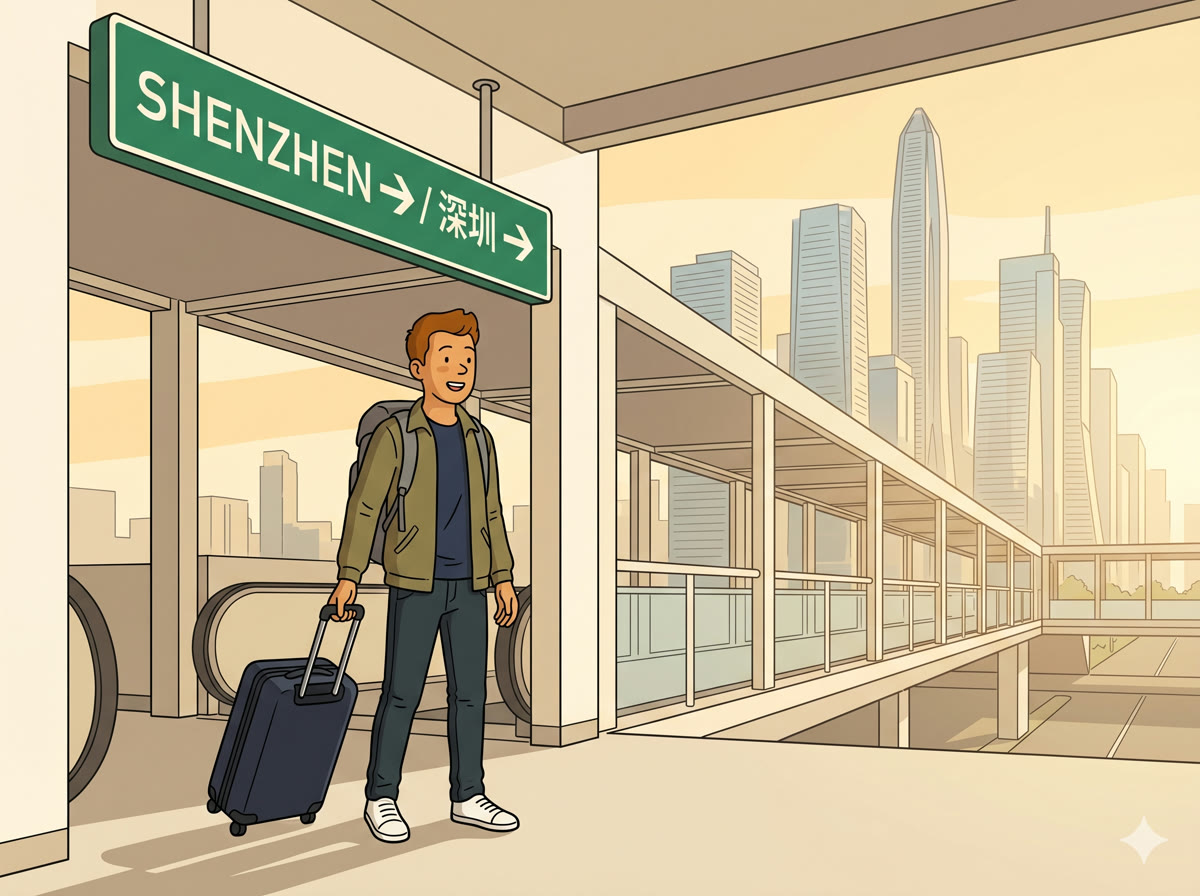
Step 1, Queue at Hong Kong immigration
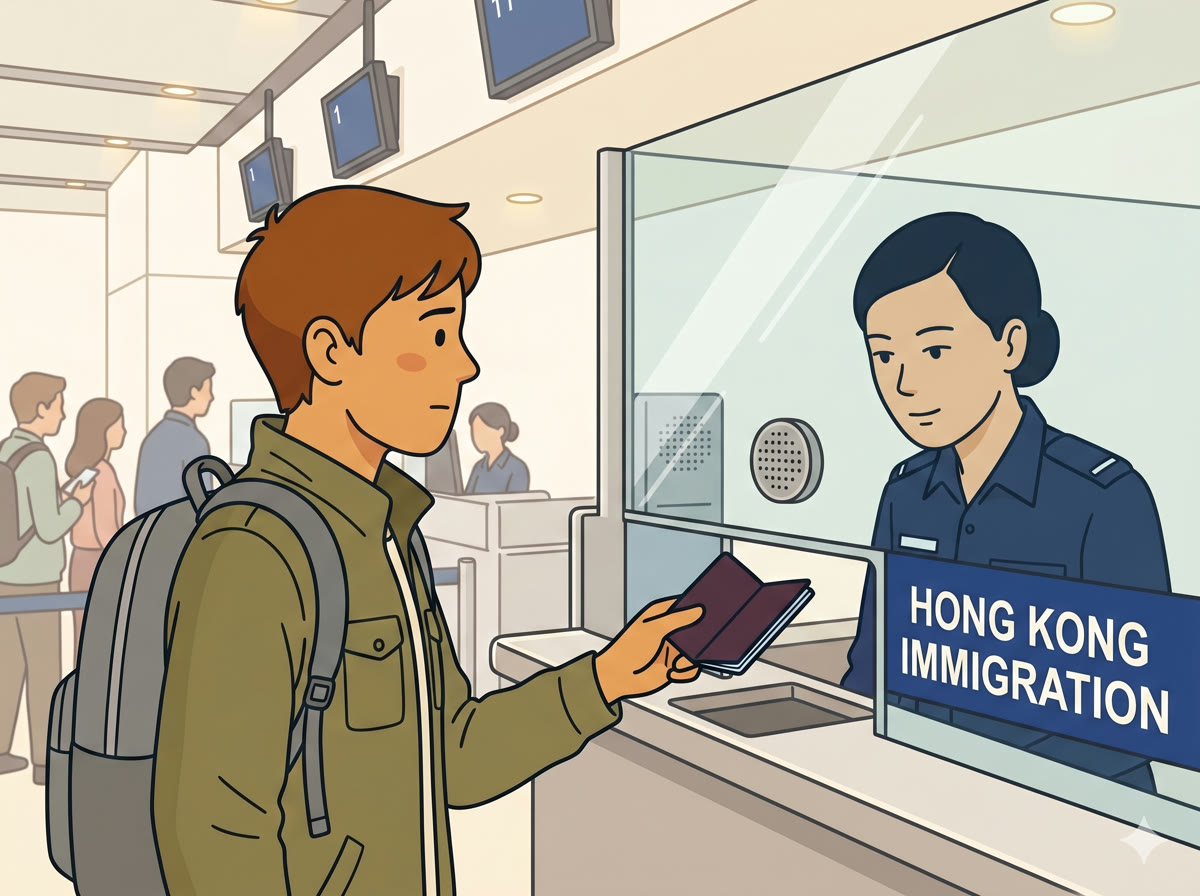
Show your passport (and visa if applicable) to the immigration officer, get your exit stamp. No forms needed on the HK side.
Step 2, Walk through
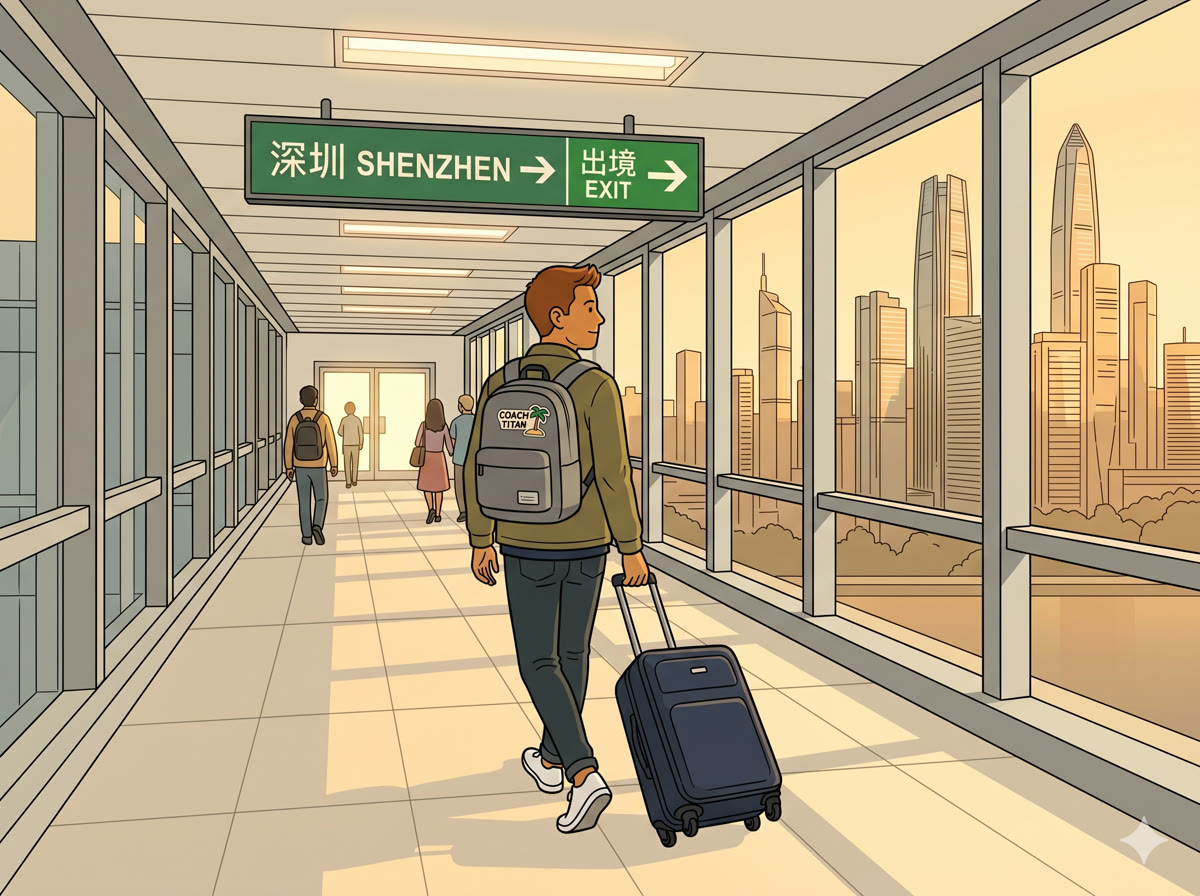
Follow the green signs across the bridge or corridor. Usually 3–5 minutes of walking. Shenzhen becomes visible through the windows ahead.
Step 3, China immigration + arrival card
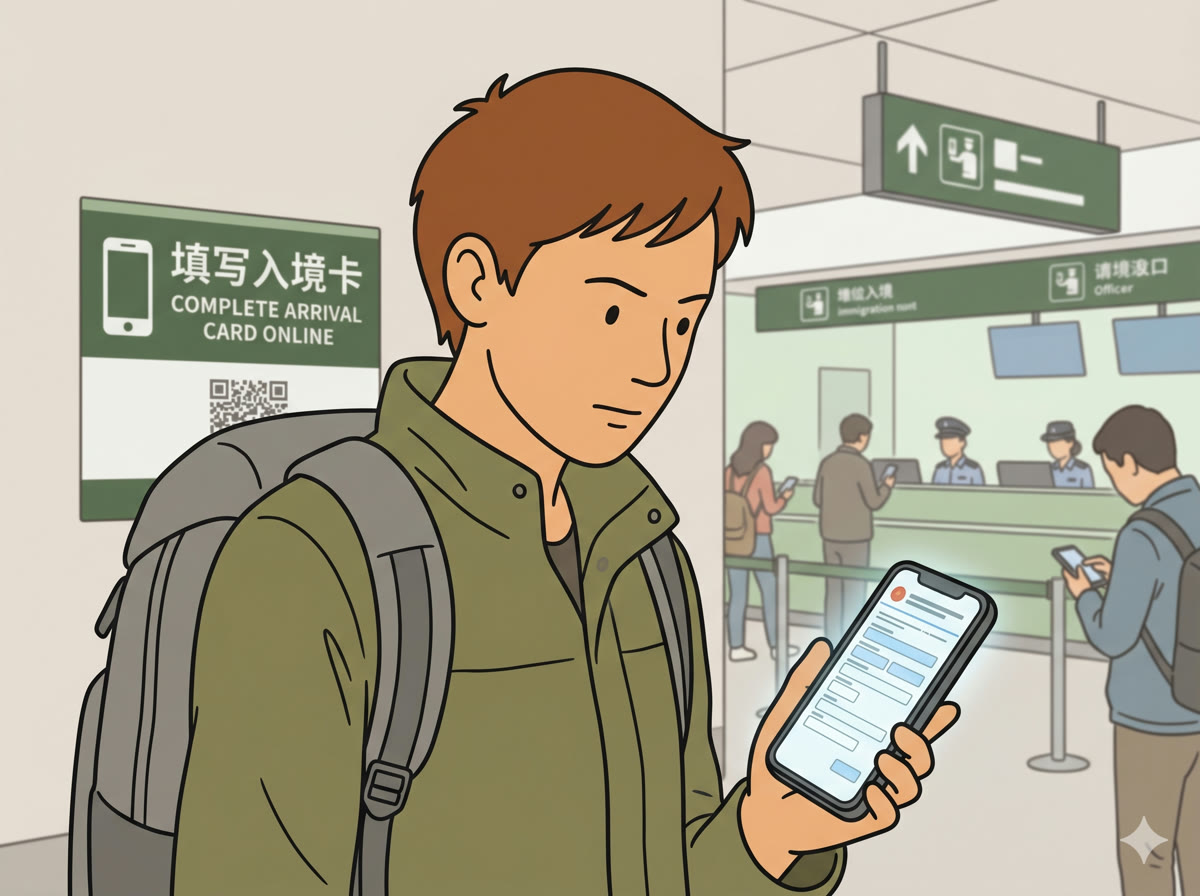
Fill in the digital arrival card at s.nia.gov.cn before you arrive, saves time at the kiosk. Then queue for the immigration counter.
Step 4, Biometrics
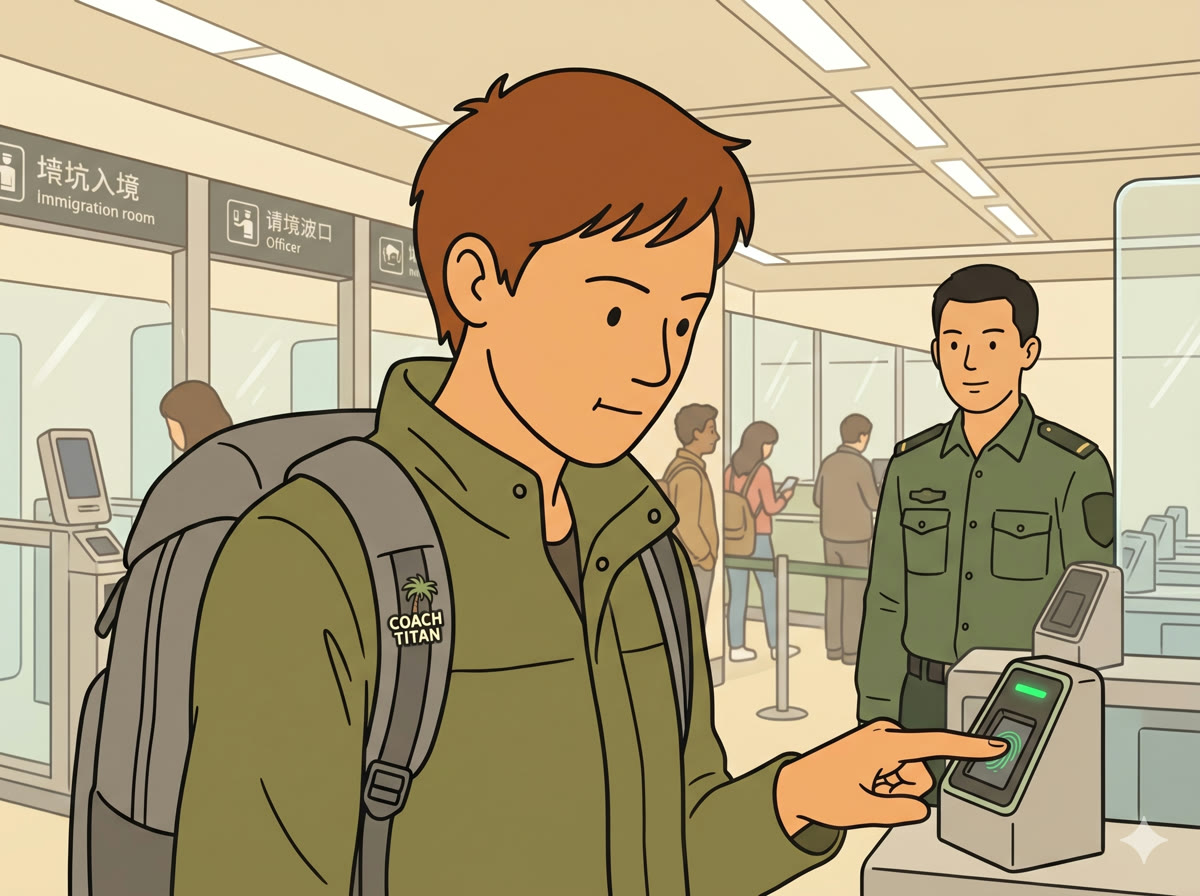
Fingerprints and photo taken on your first entry to mainland China. Calm, routine, takes about 30 seconds. The officer will guide you.
Step 5, You're in Shenzhen
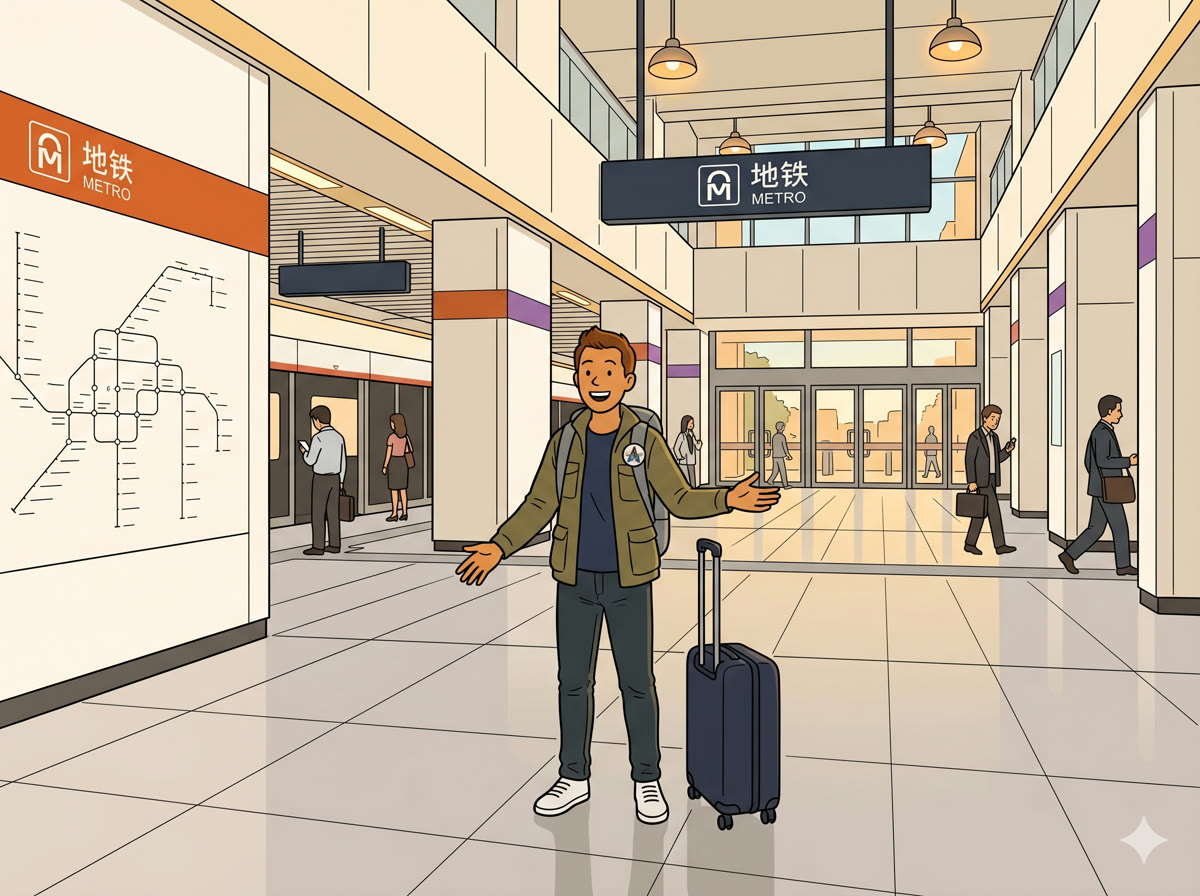
You're through. Take the escalator down to the Shenzhen metro. Signs are bilingual, follow the line colors.
Total time: 20 minutes on a quiet day, up to 1.5 hours during peak periods.
Setting Up Before You Cross
These three things will make your trip much smoother if done before crossing:
eSIM: Chinese domestic networks block Google, WhatsApp, Instagram, and YouTube. An international eSIM (Airalo, Nomad) routes your traffic through servers outside China, so these apps continue to work without needing a VPN. Buy and install before you leave Hong Kong. See our eSIM guide →
Alipay: Almost every merchant in Shenzhen accepts Alipay. Cash is still accepted but increasingly inconvenient. You can link a foreign Visa or Mastercard to Alipay International and pay directly. Set this up in Hong Kong where you have unrestricted internet access. See our payment guide →
DiDi: Download the DiDi app (China's Uber equivalent) before crossing. You'll need it to get taxis, street hailing in Shenzhen is unreliable and most drivers won't speak English.
What to Expect in Shenzhen
Shenzhen is a modern, well-organized city. The metro is extensive and easy to navigate (English labels on most signs). Mandarin is the primary language, but in commercial areas you'll often find basic English or staff who can read messages.
Key areas:
- Futian (福田): City center, malls, business district
- Nanshan (南山): Tech companies (Tencent HQ nearby), nicer residential feel
- Luohu (罗湖): Older area, near the Lo Wu crossing, has cheap markets
- Huaqiangbei (华强北): Electronics wholesale district, worth a dedicated visit
Common Questions
Can I use Hong Kong dollars in Shenzhen? No. Shenzhen uses Chinese yuan (RMB/CNY). Exchange cash at a bank or use Alipay/WeChat Pay with a foreign card. ATMs are available but often charge high fees.
Do I need to show a return ticket? Some immigration officers ask for proof of onward travel. Having a return train or flight booking on your phone is safe.
Is it safe? Shenzhen has a low violent crime rate. Normal city precautions apply (watch your phone in crowded areas).
How long can I stay? If you're on a 30-day visa-free entry, your 30 days start from the day you cross the border, regardless of how long you spend in Hong Kong in between.
Is there anything special about November 2026? Yes. Shenzhen hosts the APEC Economic Leaders' Meeting on 18–19 November, which means heavier business traffic through the crossings, hotel prices well above normal, and traffic management in parts of Futian. If you're crossing that week, read the APEC 2026 visitor guide first.